


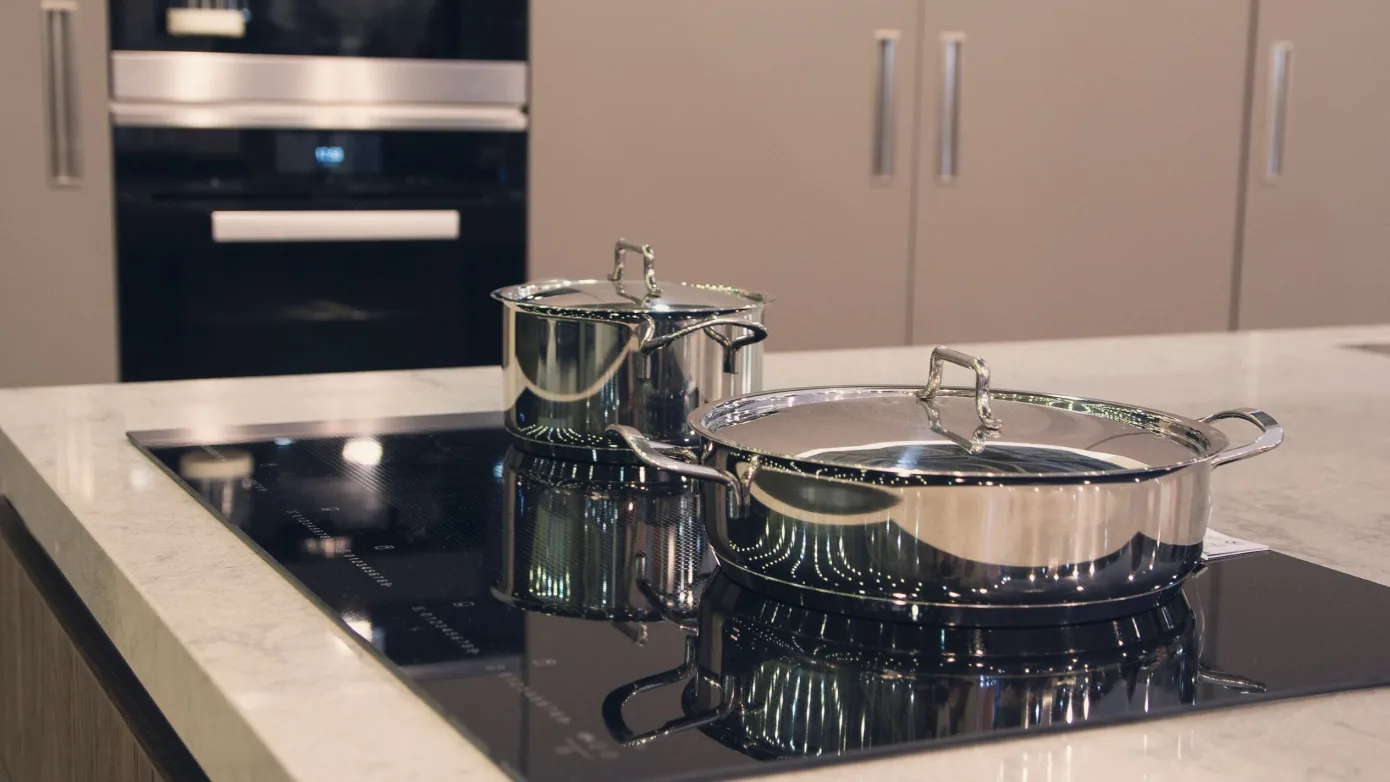
The shift from gas to induction cooking is a culinary revolution that promises a host of benefits, from faster heating times to precise temperature control and effortless cleanup. However, this transformation requires careful consideration and expertise to ensure a smooth transition. If you’re contemplating making the switch, here are essential factors to keep in mind:
1. Cookware Compatibility
Induction cooktops operate by generating a powerful magnetic field that directly heats your cookware. Consequently, your choice of cookware becomes pivotal in this transition. For induction cooking to work effectively, your cookware must be crafted from a magnetic material such as cast iron or stainless steel. These materials allow the cookware to interact with the cooktop’s magnetic field, facilitating efficient heating.
Non-magnetic cookware, like aluminum or copper, will not function correctly with an induction cooktop. It won’t heat up, and your cooktop’s performance will suffer. Additionally, opt for cookware with a level and even bottom. The magnetic field of an induction cooktop is concentrated in the center of the burner, so uneven or ridged cookware bottoms may not make adequate contact, resulting in uneven heating. Selecting suitable cookware is the foundation for ensuring your induction cooktop functions flawlessly.
2. Electrical Considerations
Before embracing induction cooking, it’s imperative to evaluate your home’s electrical system to ensure it can safely support your new appliance. Consulting an appliance expert and thoroughly reviewing the manufacturer’s specifications for your specific model are essential steps in gathering the information you need to make an informed decision.
Induction cooktops require dedicated electrical circuits capable of handling the cooktop’s load. This is in stark contrast to gas cooktops, which merely require a 10A power source for auto ignition. Electrical modifications may be necessary to accommodate the higher demands of induction cooking. Thus, enlisting the expertise of a licensed electrician is paramount to ensure safety and compliance with electrical standards.
3. Multi-Trade Installation
Switching from gas to induction cooking necessitates a multi-trade installation process. This includes coordination between a gas fitter, electrician, and potentially a stone mason.
Firstly, a licensed gas fitter must disconnect the gas supply to your old cooktop, ensuring the gas line is securely capped off to eliminate future risks.
Given the varying electrical requirements between gas and induction cooktops, an electrician is crucial. Installing an induction cooktop demands a dedicated electrical circuit capable of accommodating the appliance’s power needs.
If your kitchen’s layout and benchtop require modification to accommodate the induction cooktop, a skilled tradesperson such as a woodworker, cabinetmaker, or stonemason may be necessary, depending on the material of your benchtop.
Given the multifaceted nature of induction cooktop installation, entrusting this task to licensed professionals ensures compliance with Canadian regulations and guarantees a safe and efficient operation of your new cooktop.
4. Adjusting to Temperature Control
Induction cooktops offer rapid heating and precise temperature control, but this may require an adjustment in your cooking techniques. The quick response of induction cooktops means you might need to lower the heat earlier than you would with a gas stove to avoid overcooking or burning your dishes.
5. Cost Considerations
When comparing gas and induction cooktops, it’s essential to consider several factors. Gas cooktops tend to be more affordable upfront due to the simpler technology involved. In contrast, induction cooktops employ advanced materials and components, making them initially more expensive.
However, the operating costs can tip the scales in favor of induction cooking. Gas prices can fluctuate, and the cost of operating a gas cooktop depends on the burner’s efficiency and gas consumption. Induction cooktops, on the other hand, are highly energy-efficient and can lead to lower operational costs over time.
Embrace the Future of Cooking with MIA Installations
The decision to transition from gas to induction cooking ultimately hinges on your personal preferences and requirements. Faster cooking times, precise temperature control, and easy cleanup are among the compelling advantages of induction cooktops.
Before making your final choice, it’s advisable to conduct thorough research, seek expert guidance, and even experiment with cooking on an induction cooktop if possible.
At MIA Installations, we understand the transformative power of induction cooking. Our team of experts is well-versed in appliance installation, ensuring your transition to induction cooking is seamless and safe. If you’re ready to embrace the future of cooking, contact MIA Installations today to schedule an appointment.